
How much does a Level 2 charger installation cost? Installing a Level 2 home charger costs between $1,200 and $2,500 for most US homeowners, covering both the EVSE unit and professional electrician labor.
That figure climbs in California and other West Coast states, where costs routinely hit $2,000 to $3,000, and drops in the Midwest and South, where comparable jobs run $1,000 to $1,800.
The single biggest variable is your home’s electrical panel: older 100-amp panels often need an upgrade, and that alone adds $1,000 to $3,000 before any charger hardware is purchased.
The assumption that any 240-volt outlet will do is one of the most expensive mistakes new EV owners make. A Level 2 charger requires a dedicated 240-volt circuit, the correct breaker size for the unit, and in most jurisdictions a permit and inspection.
Skipping those steps can void your homeowner’s insurance and create a real fire risk. A licensed electrician handles all of it correctly the first time.
| Stat | Value | Source |
| Typical US installation cost | $1,200 to $2,500 | Contractor data, 2025 |
| EVSE unit cost (equipment only) | $400 to $1,000 | Manufacturer pricing |
| Level 2 charging speed | 25 to 40 miles of range per hour | US DOT |
| Federal tax credit (Section 30C) | 30% of cost, up to $1,000 | IRS, extended through 2032 |
| Required circuit size | 40 to 60 amps dedicated | NEC / electrician standard |
What is a Level 2 EV Charger and How Does It Actually Work?
A Level 2 EV charger operates on 240-volt AC power, the same voltage used by electric dryers and ovens. The charger unit itself is technically called an EVSE: Electric Vehicle Supply Equipment. It does not store electricity. What it does is manage the flow of 240V power from your home’s electrical panel into your car’s onboard charger, which then converts AC to the DC current that actually charges the battery.
That distinction matters for cost planning. The onboard charger in your vehicle sets the maximum charging rate you can actually use. A Tesla Model 3 Long Range accepts up to 11.5 kW on Level 2, for example, while a standard Nissan Leaf tops out at 6.6 kW. Installing an 11.5 kW unit in a home that also has a Leaf will not make the Leaf charge faster. You are limited by whichever is lower: the car or the charger.
Level 2 chargers typically draw between 16 and 80 amps. Most residential installs use a 48-amp circuit, which supports a 7.2 kW to 11.5 kW charger. A 240-volt circuit at 48 amps can add roughly 30 to 40 miles of range per hour for most EVs, meaning a depleted 75 kWh battery fully charges overnight. Larger trucks with 130+ kWh packs, like the Ford F-150 Lightning, need an 80-amp circuit and a 19.2 kW charger to achieve fast overnight turnaround. Standard 48-amp installs will work but will take closer to 13 to 16 hours from empty for those vehicles.
Level 2 Charger Installation Cost: National and Regional Averages
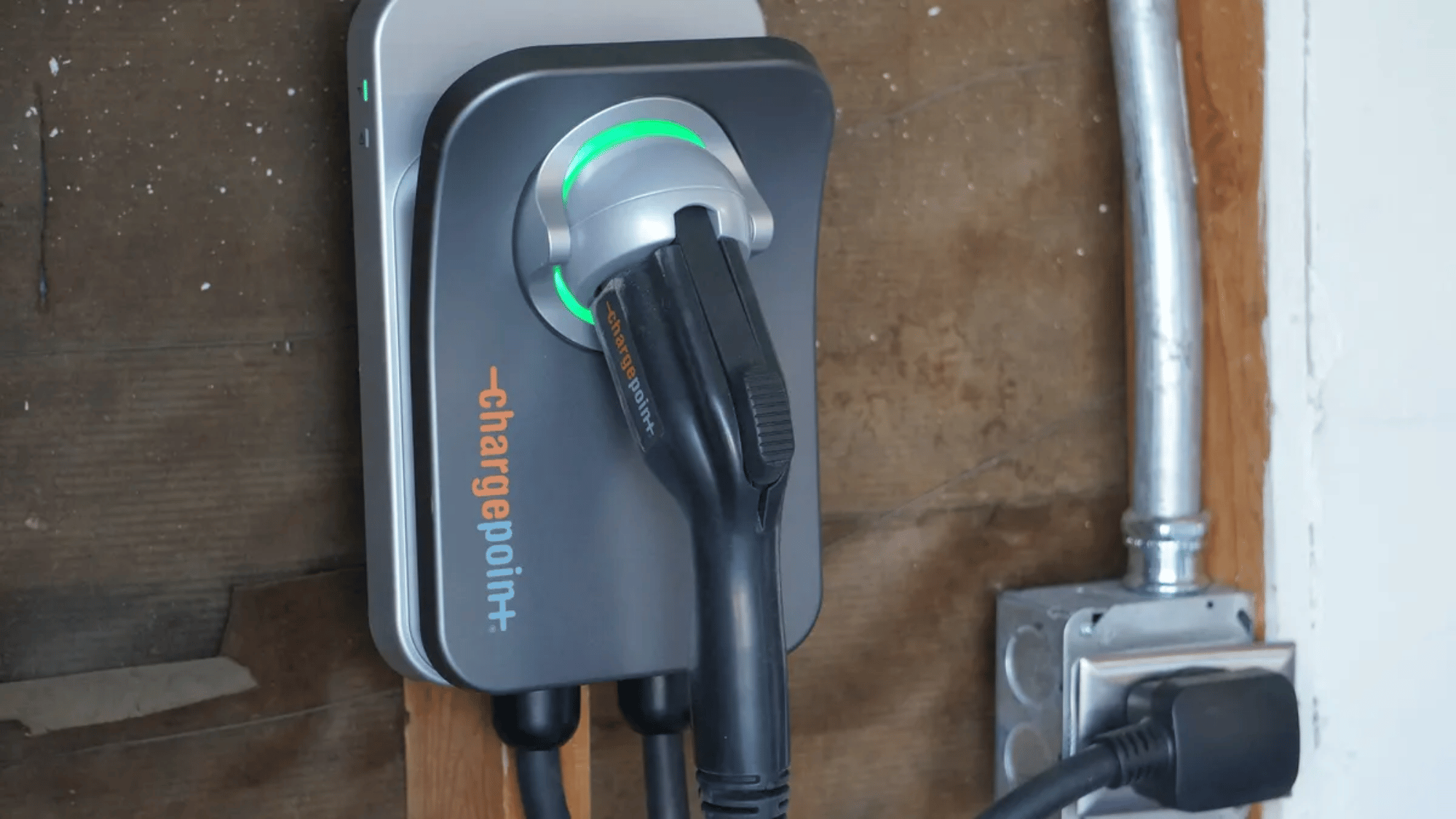
The level 2 charger installation cost in the United States ranges from $1,200 to $2,500 for a standard residential project. That figure breaks down into two distinct buckets: equipment and labor.
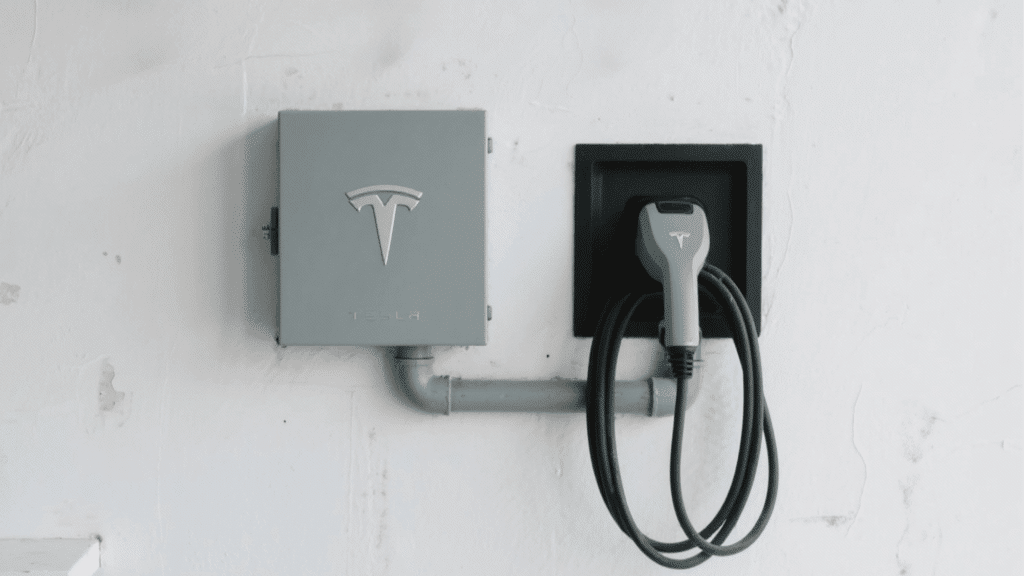
Equipment cost: The EVSE unit itself runs $400 to $1,000. Entry-level 32-amp hardwired units from brands like Eaton or Leviton start around $400. Smart chargers with WiFi scheduling, load management, and app monitoring, from ChargePoint, JuiceBox, or Wallbox, typically run $600 to $1,000. Tesla’s Wall Connector costs around $550 and is the recommended unit for Tesla owners, since it supports Tesla’s proprietary communication protocol for more accurate charge scheduling.
Labor cost: Professional electrician installation adds $800 to $1,500. That labor covers running the new 240V circuit, installing the breaker, mounting the EVSE, and pulling the permit where required.
Regional variation is significant:
- West Coast (CA, WA, OR): $2,000 to $3,000, driven by higher union electrician rates and stricter local code requirements
- Northeast (NY, MA, CT): $1,500 to $2,200 in metropolitan areas
- Midwest and South: $1,000 to $1,800 for comparable installations
- Rural areas (any region): Variable. Lower labor rates are often offset by longer wire runs from a detached garage or outbuilding
Tesla Level 2 Charger Installation Cost
Tesla owners face slightly different considerations than buyers of other EVs. The Tesla Wall Connector is specifically engineered for Tesla vehicles and supports the automaker’s proprietary communication that enables features like scheduled charging and precise energy tracking through the Tesla app. Third-party EVSE units work fine on Tesla vehicles using a J1772 adapter, but you lose some software integration.
The Tesla Wall Connector retails for around $550. Combined with professional installation, most Tesla owners pay $1,350 to $2,100 for a complete home charging setup in most US markets. California Tesla installations typically run $1,800 to $2,800.
One spec worth knowing: the Tesla Model 3 and Model Y accept up to 11.5 kW on Level 2, which requires a 60-amp circuit. A standard 48-amp install (more common and cheaper) limits you to roughly 9.6 kW, which still fully charges a 75 kWh Model Y in approximately 8 hours. For most daily driving patterns, the 48-amp install is perfectly adequate and saves $200 to $400 in panel and wiring costs.
Key Factors That Affect Level 2 Charger Installation Costs
Electrical panel capacity: This is the single largest wild card. A modern 200-amp panel with available breaker slots adds almost nothing to installation costs beyond labor. An outdated 100-amp panel that needs upgrading adds $1,000 to $3,000 before you even get to the charger itself. Have your electrician assess panel capacity before you purchase the EVSE unit.
Distance from panel to charging location: Wire costs roughly $2 to $8 per linear foot for 6-gauge or 8-gauge wire, depending on gauge and local pricing. A garage 10 feet from your main panel is cheap. A detached garage 60 feet away or a charger installation on an exterior wall requiring conduit routing through multiple walls adds real cost. Get quotes for your specific run length, not just the charger.
Permit fees: Most jurisdictions require an electrical permit for any new 240V circuit. Fees run $50 to $500 depending on your municipality. Budget for this. Some jurisdictions also require an inspection before the charger can be used, adding a day or two to the project timeline. Skipping the permit is not worth the risk: it can void insurance coverage and create liability if there is ever a fire or electrical incident.
Smart charger features: A basic hardwired 32-amp unit does the job reliably. A smart charger with scheduling, load management, and energy monitoring costs $200 to $400 more but pays dividends over time. Load management prevents the charger from drawing peak power simultaneously with other high-draw appliances, which can matter for homes on time-of-use electricity pricing. If your utility charges more per kWh between 4 p.m. and 9 p.m., a smart charger can automatically shift charging to cheaper overnight hours.
Wall mounting and weatherproofing: Indoor garage installs are the cheapest option. Exterior installs require weatherproof enclosures and conduit rated for outdoor use, typically adding $100 to $300. If you are considering how different EV charging systems compare for your specific vehicle type, installation location significantly affects both cost and long-term reliability.
How to Choose an Electrician for Level 2 Charger Installation
Not every licensed electrician has hands-on experience with EV charger installations, and the differences show up in permit compliance and code interpretation. Here is what to look for and ask when getting quotes:
Ask specifically whether they have installed EV chargers before and whether they will pull the required permits. Some electricians offer to do the work “permit-free” to save the homeowner money upfront. Decline. A permitted installation protects you during any insurance claim and during a home sale, where buyers increasingly ask for documentation on EV charging infrastructure.
Get three written quotes that itemize labor, materials, permit fees, and breaker work separately. That breakdown lets you compare apples to apples rather than a single lump-sum number that may or may not include permits or panel work. Many EV charger manufacturers, including ChargePoint and Tesla, maintain installer directories on their websites where certified installers are listed by zip code.
Comparing Charger Types: Level 1, Level 2, and DC Fast Charging
Understanding the charging landscape helps clarify why Level 2 is the right choice for most home installations. Level 1 is slow but free to set up. DC fast charging is fast but not viable for residential use. Level 2 sits precisely in the practical middle.
| Feature | Level 1 Charger | Level 2 Charger | DC Fast Charger |
|---|---|---|---|
| Voltage | 120V standard outlet | 240V dedicated circuit | 400 to 800V high power |
| Charging Speed | 3 to 5 miles per hour | 25 to 40 miles per hour | 150 to 300+ miles per hour |
| Installation Cost | No installation needed | $1,200 to $2,500 typical | $50,000+ commercial only |
| Home Use | Any standard outlet | Best home charging option | Not for residential use |
| Equipment Cost | $300 to $600 for cord | $400 to $1,000 per unit | $30,000+ infrastructure |
| Electrical Requirements | Standard 15 to 20 amp circuit | Dedicated 40 to 60 amp circuit | Three-phase commercial power |
Level 1 charging adds 3 to 5 miles of range per hour. For a driver commuting 30 miles daily, that means 6 to 10 hours plugged in to recover one day of driving. It works for plugin hybrids with 20 to 40 mile electric ranges. For a Tesla Model Y with a 330-mile range and a 75 kWh battery, charging from 20% to 100% via Level 1 takes roughly 52 hours. That is why most battery electric vehicle owners treat Level 1 as an emergency backup, not a daily solution. For more detail on how charging time varies by charger type and vehicle, including specific model-by-model estimates, that breakdown is worth reviewing before you decide on circuit sizing.
Tax Credits, Rebates, and Incentives for Level 2 Charger Installation
Federal and state incentives can cut your level 2 charger installation cost significantly, but the eligibility rules have important restrictions most homeowners miss.
Federal tax credit (Section 30C): The Alternative Fuel Vehicle Refueling Property Credit, extended through 2032 under the Inflation Reduction Act, covers 30% of the cost of the charger and its installation, up to a maximum of $1,000 for residential installations. One critical restriction added by the IRA: the charger must be installed in a qualifying census tract, defined as either a low-income community or a non-urban area. Homeowners in suburban locations outside those census tracts do not qualify for this credit, regardless of their income level. The IRS provides a mapping tool through the IRS website to check census tract eligibility before you assume the credit applies. Use it before budgeting the tax credit into your installation math.
State rebates: Fourteen states currently offer additional rebates ranging from $250 to $1,000 for residential charger purchase and installation. California’s CPUC and LADWP programs, Colorado’s EVCO initiative, and Massachusetts’ MOR-EV program lead the country in per-household savings. Some utility programs stack on top of state rebates, meaning qualified California customers can sometimes offset $1,500 or more of installation cost through combined incentives.
Utility programs: Contact your electricity provider directly. Many offer rebates on specific charger models, discounted off-peak electricity rates for EV charging, or in some cases free EVSE units for customers who agree to smart-charger load management programs.
| Note on Tax Credit Eligibility: The Section 30C federal credit requires installation in a qualifying census tract. Many suburban homeowners do not qualify. Verify your address on the IRS census tract tool before including this credit in your budget. Consult a tax professional to confirm eligibility for your specific situation. |
What This Means for You: The Real Math on Home Charging
Here is how the numbers actually work for a typical EV owner. A 2024 Tesla Model Y Standard Range has a 57.5 kWh battery. On Level 2 at 9.6 kW (48-amp circuit), it charges from 20% to 100% in roughly 4.8 hours overnight. The national average residential electricity rate is about $0.17 per kWh as of 2025, according to the US Energy Information Administration. A full charge from 20% costs approximately $7.80 in electricity. Compare that to the equivalent gas cost for a typical SUV doing 28 MPG over the same 260 miles at $3.50 per gallon: roughly $32.50. That is $24 saved per full charge cycle, or around $720 annually for a driver who charges from low to full twice a week.
The $1,500 installation cost pays for itself in under three years for most daily drivers through fuel savings alone, before accounting for lower maintenance costs on EVs. That payback timeline shortens considerably in states with high gasoline prices and utility rebate programs.
Property value is a real secondary benefit. A home with installed Level 2 charging infrastructure is meaningfully more attractive to the growing share of buyers who own or plan to own EVs. Real estate data from markets with high EV penetration, including California and the Pacific Northwest, show that installed EVSE adds $1,500 to $3,000 in appraised value in active EV markets.
Frequently Asked Questions
How much does it cost to install a Level 2 charger at home?
Most homeowners pay $1,200 to $2,500 for a complete Level 2 home charger installation, including the EVSE unit and electrician labor. The lower end of that range assumes a modern electrical panel with available capacity and a short wire run. The upper end reflects older homes needing panel work and longer conduit runs to the garage or driveway.
How much does Level 2 charging cost to run per month?
At the US average residential electricity rate of roughly $0.17 per kWh, charging a 75 kWh battery electric vehicle from empty to full costs about $12.75. A driver adding 1,000 miles of range per month, typical for most commuters, pays $30 to $50 monthly in electricity depending on their vehicle’s efficiency and local electricity rates.
Do I need a permit to install a Level 2 EV charger?
In most US jurisdictions, yes. A Level 2 charger requires a new 240V circuit, which qualifies as new electrical work under the National Electrical Code and triggers a permit requirement in nearly every county and municipality. The permit costs $50 to $500 and requires an inspection once installation is complete. Working without a permit can void homeowner’s insurance coverage for fire incidents related to electrical work.
What is the Level 2 EV charger installation cost for a Tesla?
Tesla owners typically pay $1,350 to $2,100 for a complete home installation using Tesla’s Wall Connector ($550 retail) and professional electrician labor. Tesla maintains a network of certified installers through its website. A 48-amp install works well for both the Model 3 and Model Y. The larger Cybertruck benefits from a 60-amp circuit to fully leverage its onboard charger capacity.
How do I find a Level 2 charger installer near me?
Start with EVSE manufacturer installer directories. ChargePoint, Wallbox, Tesla, and Eaton all maintain zip-code-searchable installer networks on their websites. Your state’s clean energy office or utility provider may also maintain a list of certified EV charger installers eligible for rebate programs. Always get three written quotes that itemize labor, materials, and permit fees separately.
Does a Level 2 charger increase my home’s electricity bill significantly?
A 48-amp Level 2 charger draws up to 11.5 kW when actively charging. Running it for 8 hours adds 92 kWh to your monthly usage, costing roughly $15 at average US rates. Most EV owners add $30 to $60 monthly in electricity costs depending on their driving patterns. Smart chargers that schedule overnight charging during off-peak rate windows can cut that figure by 20 to 40 percent with time-of-use utility plans.
Is a Level 2 charger worth the installation cost?
For any battery electric vehicle driver, yes. Level 1 adds 3 to 5 miles of range per hour, which is genuinely insufficient for a vehicle with 60 to 100 kWh of battery capacity. Level 2 adds 25 to 40 miles per hour, meaning a depleted battery fully charges overnight without any schedule management. The $1,200 to $2,500 investment typically recoups through fuel savings within two to three years, and the installed charger adds resale value to the home.
Conclusion
The level 2 charger installation cost for most US homeowners lands between $1,200 and $2,500 when you combine the EVSE unit and electrician labor. That number shifts up or down based on three variables worth knowing before you get quotes: your panel’s current capacity, how far the wire needs to run from the panel to your parking spot, and your state’s permit fees. If your home has a 100-amp panel or was built before the 1990s, get a panel assessment first. Electrical upgrade costs can double the total project budget, and knowing that upfront prevents surprises.
The federal Section 30C tax credit is worth pursuing if your address qualifies under the IRS census tract requirement, but do not assume eligibility based on income alone. Check the IRS mapping tool, verify with a tax professional, and then factor the credit into your final cost calculation. Stack any available state and utility rebates on top. In states with active rebate programs, out-of-pocket costs below $1,000 are achievable for qualifying installations.
For Tesla owners specifically: a 48-amp install using the Tesla Wall Connector covers the Model 3 and Model Y without spending up to the 60-amp ceiling. For Rivian R1T and Ford F-150 Lightning owners with 130+ kWh batteries, the 60-amp circuit and 19.2 kW charger is worth the additional $200 to $400 in upfront cost to avoid 14-hour overnight charge times. Get three written quotes from licensed electricians who have pulled EV charger permits before, specify the circuit size you need, and confirm permit inclusion in writing before work begins.
Specifications and pricing current as of May 2026. Verify tax credit eligibility with a qualified tax professional and confirm equipment pricing with manufacturers before purchase.