
If you’ve ever wondered how many kWh to charge a Tesla, you’re not alone. When I first looked into buying an electric car, I was confused too.
What’s a kWh? How much power does it require? And how long does it really take to charge an EV?
In this blog, I’ll break it all down in simple terms. You’ll learn how many kilowatts to charge a Tesla, how much electricity each model (Model 3, Y, S, and X) uses, and how charging costs compare to gas.
I’ll also cover factors that affect charging time and energy use, like charger type and weather, so you’ll have a clear idea of what to expect before plugging in your Tesla.
Tesla Battery Capacity by Model
Before figuring out how many kWh to charge a Tesla, it helps to know how much energy each model actually holds and uses.
| Tesla Model | Battery Capacity (kWh) | Approx. kWh Needed (Including 10% Loss) | Range (Miles) |
|---|---|---|---|
| Model 3 (RWD) | 60–70 kWh | 66–77 kWh | 270–310 miles |
| Model 3 (Performance/Long Range) | 82–94 kWh | 90–103 kWh | 315–358 miles |
| Model Y | 78.1 kWh | 85.9 kWh | 310 miles |
| Model S | 100 kWh | 110 kWh | 396 miles |
| Model X | 100 kWh | 110 kWh | 348 miles |
The Model 3 and Model Y use less energy overall, while the Model S and Model X carry bigger 100 kWh batteries for longer range and performance.
How to Calculate the Charging Time of Tesla
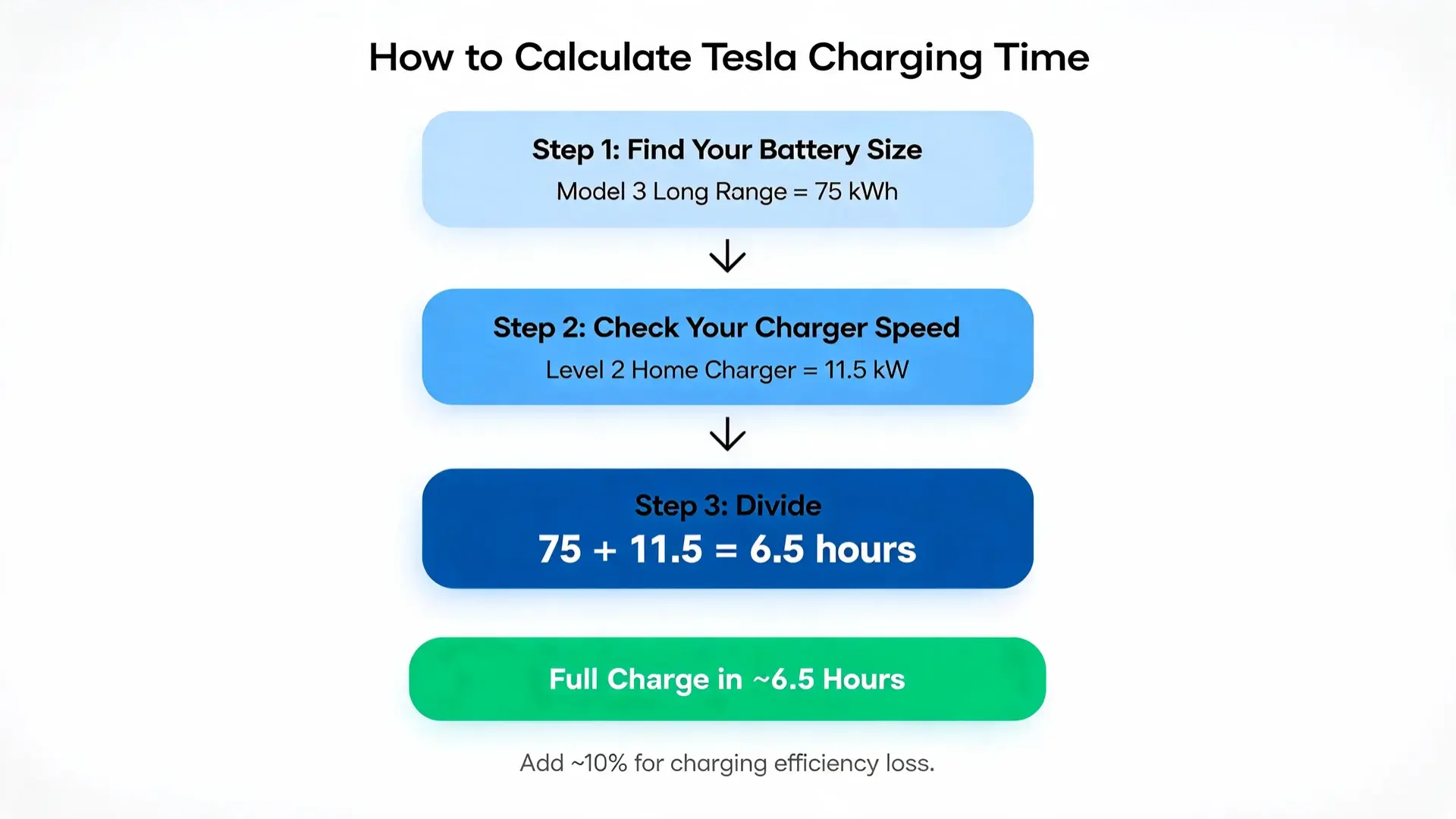
To understand how many kWh to charge a Tesla, it helps to know what kWh actually means. In simple terms, a kilowatt-hour (kWh) measures how much energy is used over time. It’s the same unit you see on your electricity bill; it tells you how much power something uses in one hour.
Here’s the basic formula for estimating how long it takes to charge your Tesla:
Charging Time = Battery Capacity (kWh) / Charger Power (kW)
For example, if your Tesla has a 75 kWh battery and you’re using an 11.5 kW Level 2 home charger, the calculation looks like this:
75 / 11.5 = 6.5 hours for a full charge.
Keep in mind: kW (kilowatt) measures power, or how fast energy flows, while kWh (kilowatt-hour) measures total energy used. The EV charging time depends on both of these numbers together.
Factors That Affect How Many kWh You’ll Use
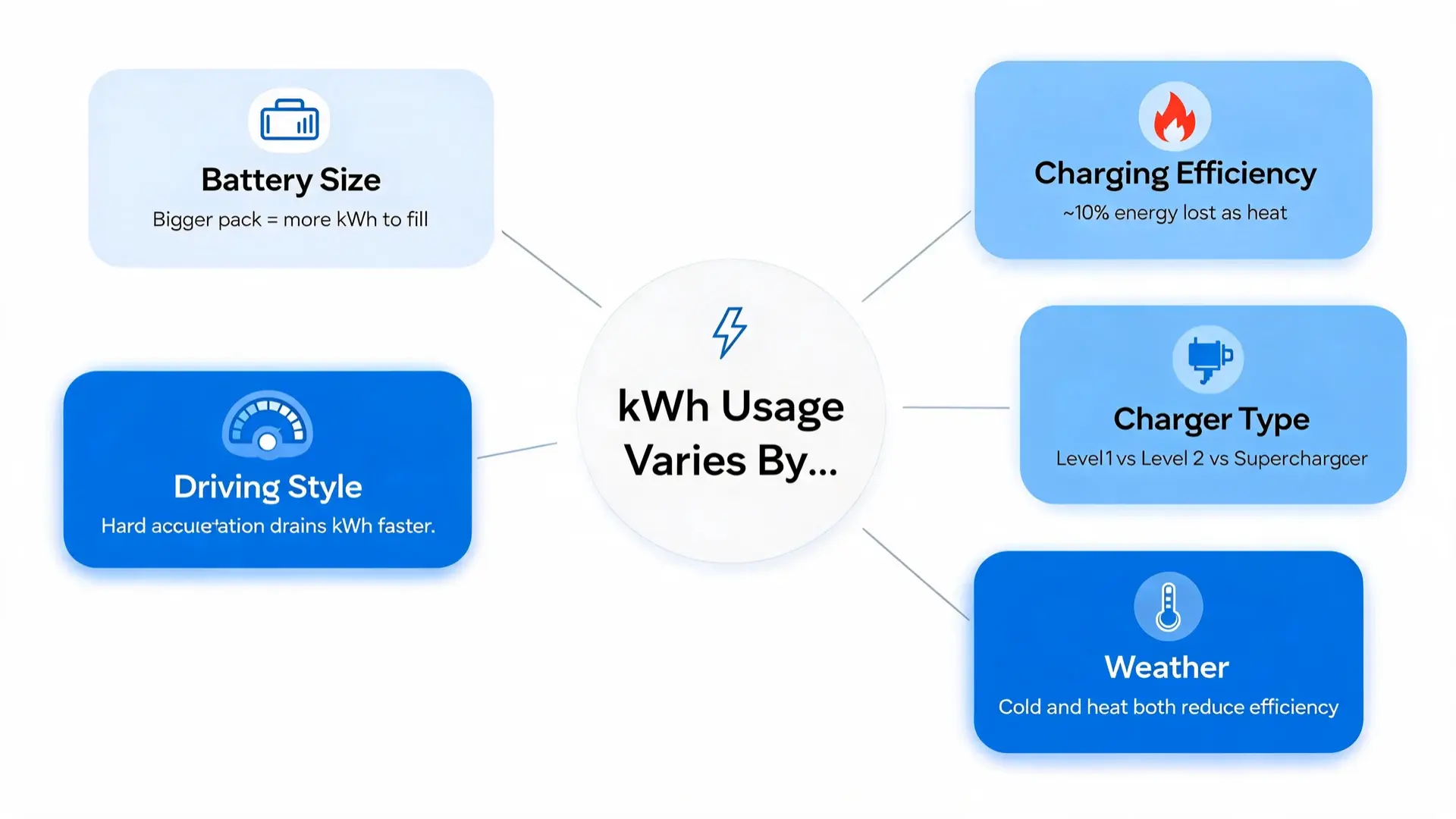
The amount of electricity a Tesla needs for a full charge can vary significantly depending on real-life conditions. Things like battery size, driving habits, and even the weather can make a noticeable difference. Here’s a closer look at the main factors that affect how many kWh to charge a Tesla and why they matter.
1. Battery Size
Every Tesla model comes with a different battery size, and that’s the biggest reason why energy use varies. A larger battery holds more electricity, so it naturally takes more kilowatt-hours (kWh) to fill up.
The Model S and Model X come with 100 kWh batteries, while the Model 3 uses around 60–70 kWh, a difference that traces back to Tesla battery cell composition and how they’re configured.
Bigger batteries also mean longer range and fewer charging stops, even though each full charge uses more energy overall.
2. Charging Efficiency
Charging a Tesla isn’t perfectly efficient; some energy gets lost along the way, mostly as heat. On average, about 10% of the power used during charging doesn’t make it into the battery.
That means a 75 kWh battery might pull around 82 kWh from the wall to reach a full charge. Charger quality, battery temperature, and electricity flow all influence how much energy is lost during the process.
3. Charger Type
The kind of charger used makes a big difference in both speed and efficiency.
- Level 1 (120V outlet): The slowest option, adding just 3–6 miles of range per hour, but workable for light daily use.
- Level 2 (240V outlet): The most popular home setup, giving 25–40 miles of range per hour and easily handling overnight charging.
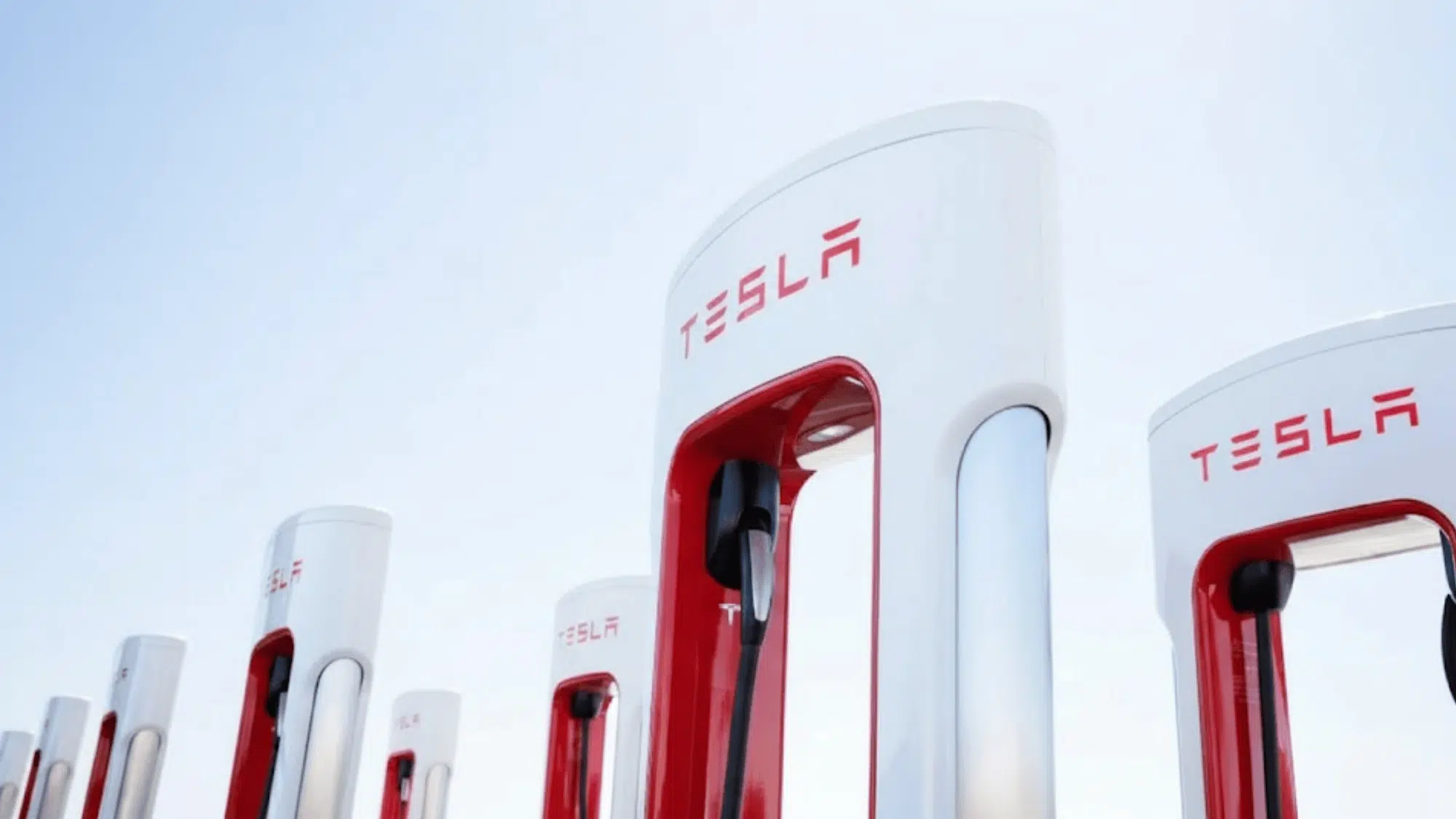
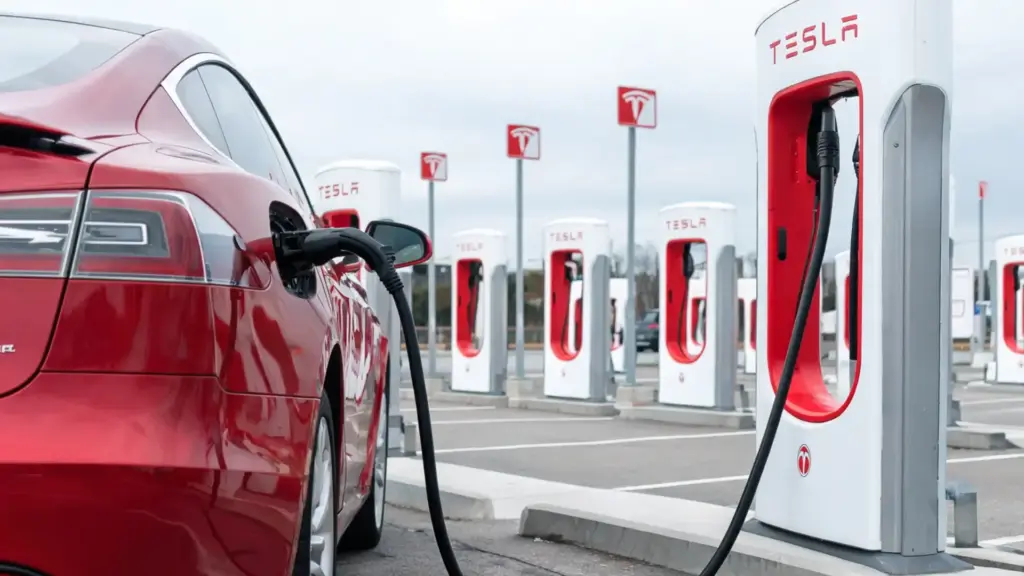
- DC Fast Charger or Tesla Supercharger (480V): The quickest method, adding up to 322 miles in 15 minutes. This is what a Level 3 charging station delivers, making it ideal for road trips or quick top-ups.
Level 2 works best for daily use, while Superchargers are well-suited for long-distance travel.
4. Weather Conditions
Temperature affects both charging and driving range. In cold weather, the battery uses extra energy to stay warm, which can reduce range and increase kWh use.
Hot weather has a similar effect, as the cooling system works harder to prevent overheating. Tesla’s battery system automatically adjusts to protect itself, but moderate temperatures around 70°F (21°C) offer the best performance and efficiency.
5. Driving Style
How the car is driven also affects how many kWh are used per mile. Rapid acceleration, frequent braking, and high-speed driving drain energy faster.
Smooth driving, steady speeds, and gentle braking can help extend range and make each charge last longer. Tesla’s regenerative braking feature also helps recover some energy whenever the car slows down, improving overall efficiency.
All these factors work together to shape a Tesla’s real-world energy use. Understanding them helps make smarter charging choices and get the most miles out of every kilowatt-hour.
Cost Breakdown: How Much Does It Cost to Charge a Tesla
Using the U.S. average electricity rate of $0.16 per kWh, charging a Tesla at home is affordable compared to filling up a gas tank. The exact amount depends on your model and how much energy its battery holds.
Here’s a quick breakdown of the average charging costs for each Tesla model:
| Model | kWh Needed | Cost per Full Charge | Cost per Mile |
|---|---|---|---|
| Model 3 | 75 kWh | $12.00 | $0.04 |
| Model Y | 85 kWh | $13.60 | $0.05 |
| Model S | 100 kWh | $16.00 | $0.05 |
| Model X | 100 kWh | $16.00 | $0.05 |
Even the largest Tesla models cost less than $20 for a full charge, offering hundreds of miles of range. That’s a fraction of what a gas-powered car would cost to travel the same distance.
It’s worth noting that costs vary by location and charging method. Superchargers or states with higher electricity prices, like California, may push the total a bit higher. For most Tesla owners, home charging remains the most affordable and convenient option.
Public Charging Details (Supercharger Costs per kWh)
When traveling long distances, Tesla Superchargers make charging fast and convenient. These stations use direct current (DC) to deliver high-speed charging, often adding up to 200 miles in 15 minutes.
However, public charging typically costs more than home charging because of higher power delivery and network maintenance fees.
- Average Cost: In most U.S. states, Tesla Supercharger rates range from $0.28 to $0.40 per kWh. A full charge for a Model 3 usually costs $20–$25, while larger models like the Model S or X can cost $30–$35.
- Billing Method: Some states charge per minute instead of per kWh, with pricing based on charging speed. Faster charging rates fall into higher tiers, making quick top-ups convenient but slightly more expensive than slower home charging.
Superchargers are ideal for road trips and quick stops, while home charging stays the most affordable and energy-efficient option for everyday use.
Tesla vs Gas Cost Comparison
One of the biggest benefits of owning a Tesla is the savings on fuel. While gas prices continue to rise, electricity remains far more stable and affordable. Here’s how the numbers compare based on U.S. average rates.
| Vehicle Type | Energy/Fuel Used (per 100 miles) | Cost per Unit | Total Cost per 100 Miles |
|---|---|---|---|
| Tesla (Electric) | 34 kWh | $0.16 per kWh | $5.44 |
| Gas Car (30 MPG) | 3.3 gallons | $3.28 per gallon | $10.82 |
Over time, the difference becomes clear: driving a Tesla can cut your fuel costs by nearly half. Home charging adds extra convenience too, letting you skip gas stations and start each day with a full battery. It’s cleaner, simpler, and easier on the wallet.
Tesla Charging Tips for Energy Savings
Charging efficiently saves money and helps your Tesla battery last longer. With a few simple adjustments, you can reduce your overall energy use and get the most out of every charge.
1. Charge During Off-Peak Hours
Electricity prices usually drop at night when fewer people are using power. Charging your Tesla during these off-peak hours, typically between midnight and early morning, can add up to real savings over time.
Most home chargers and Tesla’s own system let you schedule charging automatically, so your car charges when rates are lowest without you having to think about it.
2. Keep Your Battery Between 20% and 80%
For daily driving, keeping your Tesla’s charge between 20% and 80% is the better habit. Charging to 100% regularly stresses the battery and can shorten its lifespan.
Staying within this range keeps your battery healthy and ensures consistent performance, while also cutting down on unnecessary charging cycles.
3. Use Scheduled Charging
Tesla’s scheduled charging feature lets you automate when your car starts charging. You can set it to begin when electricity rates are lowest or when you typically get home. It’s a hands-free way to charge smarter without giving it a second thought.
4. Precondition Before Charging in Cold Weather
Charging in cold weather is less efficient because cold batteries take longer to accept energy. Using the preconditioning feature warms your Tesla’s battery before plugging in, allowing it to charge faster and use less power. You can activate this from the Tesla app before you even step outside.
5. Limit Use of Superchargers for Daily Charging
Tesla Superchargers are fast and convenient, but using them daily can affect battery health and cost more per kWh than charging at home.
For everyday use, a Level 2 home charger is gentler on your battery and more affordable in the long run.
6. Monitor Charging Through the Tesla App
The Tesla app lets you track energy usage, cost, battery level, and charging time all in one place. Keeping an eye on these details helps you spot patterns and optimize your routine.
You can unplug as soon as your car hits your target charge level, avoiding wasted electricity and keeping energy bills in check.
By applying these charging habits, you can lower your energy costs, extend your battery’s life, and make your Tesla more efficient overall. Smart charging is about driving cleaner, longer, and more economically.
Case Study on Tesla: Real-World Energy Use Example
Let’s put all this into perspective with a real example. A Tesla Model 3 Long Range has a 75 kWh battery and an average charging efficiency of about 94%.
In simple terms, that means it actually draws around 80 kWh of electricity from the wall to reach a full charge. The extra energy accounts for the small losses that occur during the charging process.
On average, a Tesla uses about 34 kWh for every 100 miles driven. That’s roughly the same amount of energy most households use to power their homes for a full day.
Over its lifetime of around 500,000 miles, a Tesla could use roughly 170,000 kWh of electricity, which is still far more efficient and eco-friendly than burning thousands of gallons of gasoline. That long-term efficiency is a big part of what makes Tesla a practical choice for anyone thinking about going electric.
Frequently Asked Questions
How many kWh does it take to fully charge a Tesla Model 3?
A Tesla Model 3 RWD has a usable battery capacity of around 57.5 to 60 kWh, but because charging is not 100% efficient, the car actually draws closer to 63 to 66 kWh from the wall during a full charge.
The Long Range and Performance versions carry larger packs of around 82 kWh, pulling roughly 88 to 90 kWh from the grid when charged from empty. The roughly 10% gap between battery size and wall consumption is normal and is caused by heat loss and power conversion during the charging process.
Is charging a Tesla cheaper than buying gas?
Yes, in most cases, charging a Tesla at home costs significantly less per mile than fueling a gas car. At the U.S. average electricity rate of about $0.16 per kWh, driving a Tesla costs roughly $5.44 per 100 miles, compared to around $10.82 for a 30 MPG gas vehicle at average gas prices.
That works out to roughly 50% savings on fuel, adding up to over $1,000 a year for typical drivers. The savings are highest for drivers who charge at home overnight during off-peak hours, where rates in some states drop as low as $0.07 to $0.11 per kWh.
Does cold weather affect how many kWh are needed to charge a Tesla?
Cold weather does increase the total kWh drawn from the grid during charging. When temperatures drop below freezing, the battery management system uses extra energy to warm the battery pack to an optimal charging temperature, which means more electricity is consumed before any of it actually reaches the cells.
Tesla owners in colder climates often see charging efficiency drop noticeably in winter, with some reporting 15 to 20% more energy needed for a full charge.
Final Thoughts
Charging a Tesla isn’t as complicated as it sounds once you get the hang of it. After learning how kWh works and how things like charger type, driving style, and weather affect charging, I found it much easier to plan my routine.
Most Teslas need about 70 to 100+ kWh for a full charge, and honestly, it costs far less than filling up a gas tank.
Over time, I’ve realized how efficient and affordable it really is to drive electric. For me, it’s not just about saving money; it’s about driving smarter and cleaner every day.
What about you? I’d love to hear how much it costs for you to charge your Tesla. Share your thoughts in the comments!