


The “Service Battery Charging System” message means your car’s alternator is not delivering enough voltage to keep the battery charged while the engine runs. It is not the same as a dead battery alert.
The battery warning light signals that stored power is already depleted; this message signals that the system responsible for replenishing that power has failed or degraded.
It appears most often on GM vehicles (Chevrolet, GMC, Buick, Cadillac), though the underlying fault can occur on any make. The charging system consists of four core components working together: the battery, alternator, serpentine belt, and electronic control unit (ECU). When any link in that chain weakens, the car’s ECU detects a voltage drop and triggers the warning.
| Stat | Value | Source |
| Healthy battery voltage (engine off) | 12.6V | Mechanic Base |
| Normal alternator output (engine running) | 13.5 to 14.5V | Firestone Complete Auto Care |
| Average battery lifespan | 3 to 5 years | AAA Automotive |
| Estimated drive time on battery alone | 20 to 30 minutes (less with AC or headlights on) | Mechanic Base |
| Most commonly failing component | Alternator | Firestone Complete Auto Care |
How the Charging System Works
The alternator is a small AC generator driven by the serpentine belt, which connects to the engine’s crankshaft. As the engine runs, the crankshaft turns the belt, the belt spins the alternator’s pulley, and the alternator converts that mechanical energy into electrical current. An internal rectifier converts the alternating current (AC) into direct current (DC), which the battery can store.
A voltage regulator then controls output so the system delivers a steady 13.5 to 14.5 volts regardless of engine speed or electrical load.
The ECU monitors this voltage continuously. If output drops below about 12.6 volts under load, or spikes above 14.8 volts, the ECU logs a fault code and displays the warning. That code is what makes this message more useful than a simple battery light: it can be read with an OBD-II scanner to identify exactly which component triggered the fault.
One point that catches people off guard: a fully functional alternator can still trigger this warning if the battery has an internal short circuit. A shorted cell creates a constant heavy load that even a healthy alternator cannot compensate for, so voltage drops and the warning appears. The fix in that case is battery replacement, not alternator replacement. Starting with a multimeter test (described in Step 2 below) separates these two scenarios before any parts are purchased.
Common Causes of the Service Battery Charging System Warning
The warning does not point to a single fault. It is a system-level alert. Here are the seven most common triggers, ranked roughly from most to least frequent:
- Failing alternator: The alternator’s internal diodes or brushes wear out over time. Output becomes inconsistent or drops below the 13.5V threshold. Symptoms include dim or flickering headlights and a battery that keeps draining despite being relatively new.
- Weak or internally damaged battery: A battery that can no longer hold a surface charge forces the alternator to run at maximum output continuously. This both triggers the warning and accelerates alternator wear. Batteries older than four years are prime suspects.
- Corroded or loose battery terminals: Oxidation builds resistance at the terminal connection. Even a thin layer of white or blue-green corrosion can reduce current flow enough to trigger the warning. This is the easiest and cheapest fix to attempt first.
- Broken or slipping serpentine belt: The serpentine belt drives the alternator. A belt that slips, cracks, or breaks stops the alternator from spinning at the correct speed. You will often hear a high-pitched squeal from the engine bay before the warning appears.
- Faulty voltage regulator: The voltage regulator (sometimes built into the alternator) controls output. When it fails, the system either undercharges or overcharges the battery. Overcharging (above 15V) can boil battery electrolyte and destroy cells quickly.
- Blown fuse or damaged wiring: A single blown fuse in the alternator circuit can cut charging entirely. Frayed or corroded wiring creates intermittent faults that appear and disappear, making them harder to diagnose.
- Failing Battery Control Module (BCM): On GM platforms specifically, the BCM monitors and manages charging. A degraded BCM can misread voltage data and trigger the warning even when the battery and alternator test fine. If the warning returns shortly after a confirmed repair, the BCM is worth testing. It is the least common cause but the most frequently overlooked one.
How to Diagnose and Fix the Service Battery Charging System Warning
Work through these steps in order. Each one rules out the most common causes before moving to more complex (and expensive) ones.
Step 1: Check and Clean Battery Terminals
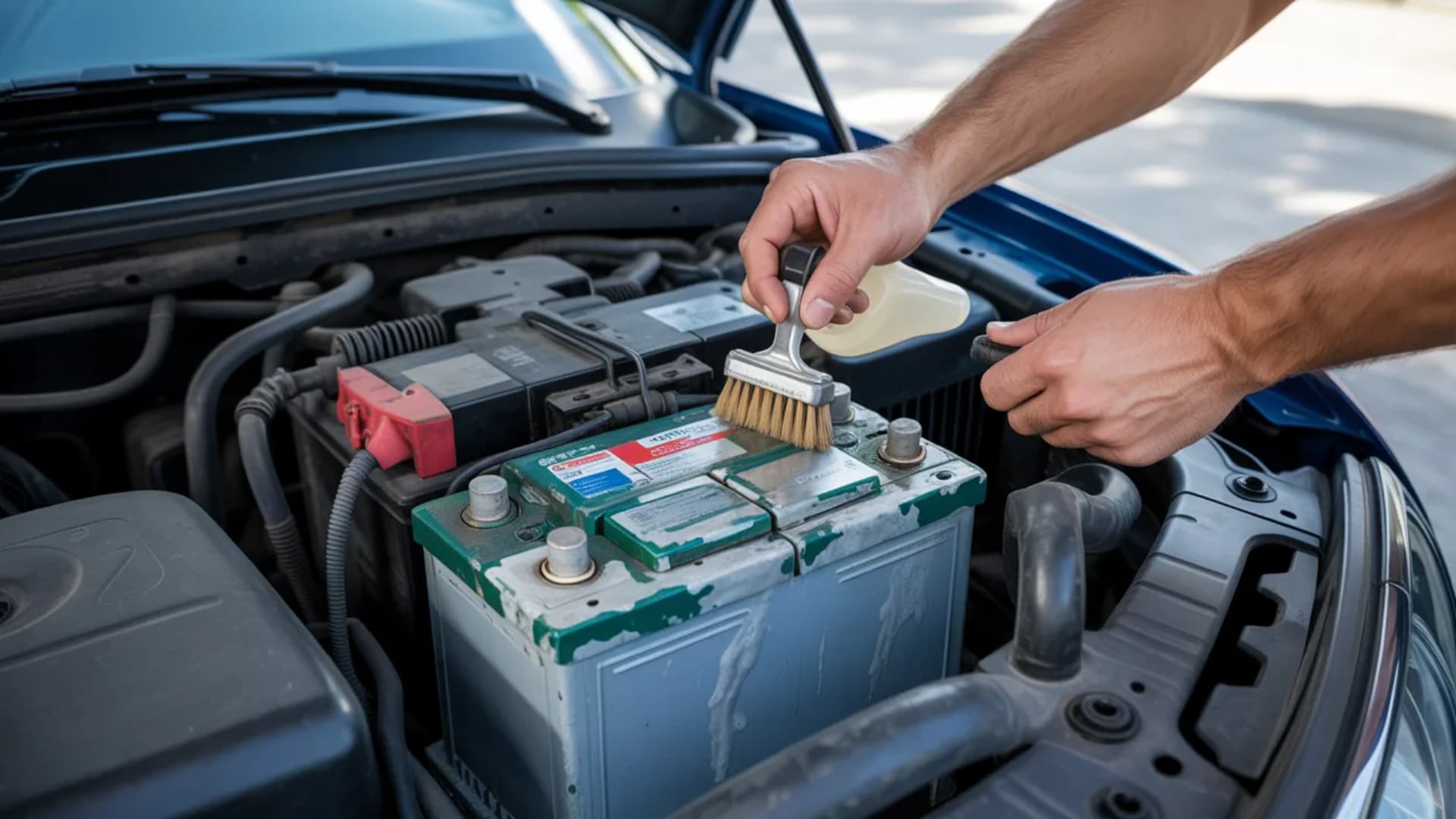
Turn off the engine and look at both battery terminals. White, green, or blue powder on the posts indicates oxidation. Mix one tablespoon of baking soda with a cup of water, apply it to the terminals with a stiff brush, and let it fizz for 30 seconds before rinsing and drying. Retighten the clamp bolts so there is no movement. This repair costs nothing if you do it yourself and takes under 10 minutes. It clears the warning entirely in a surprising number of cases.
Step 2: Test the Battery Voltage
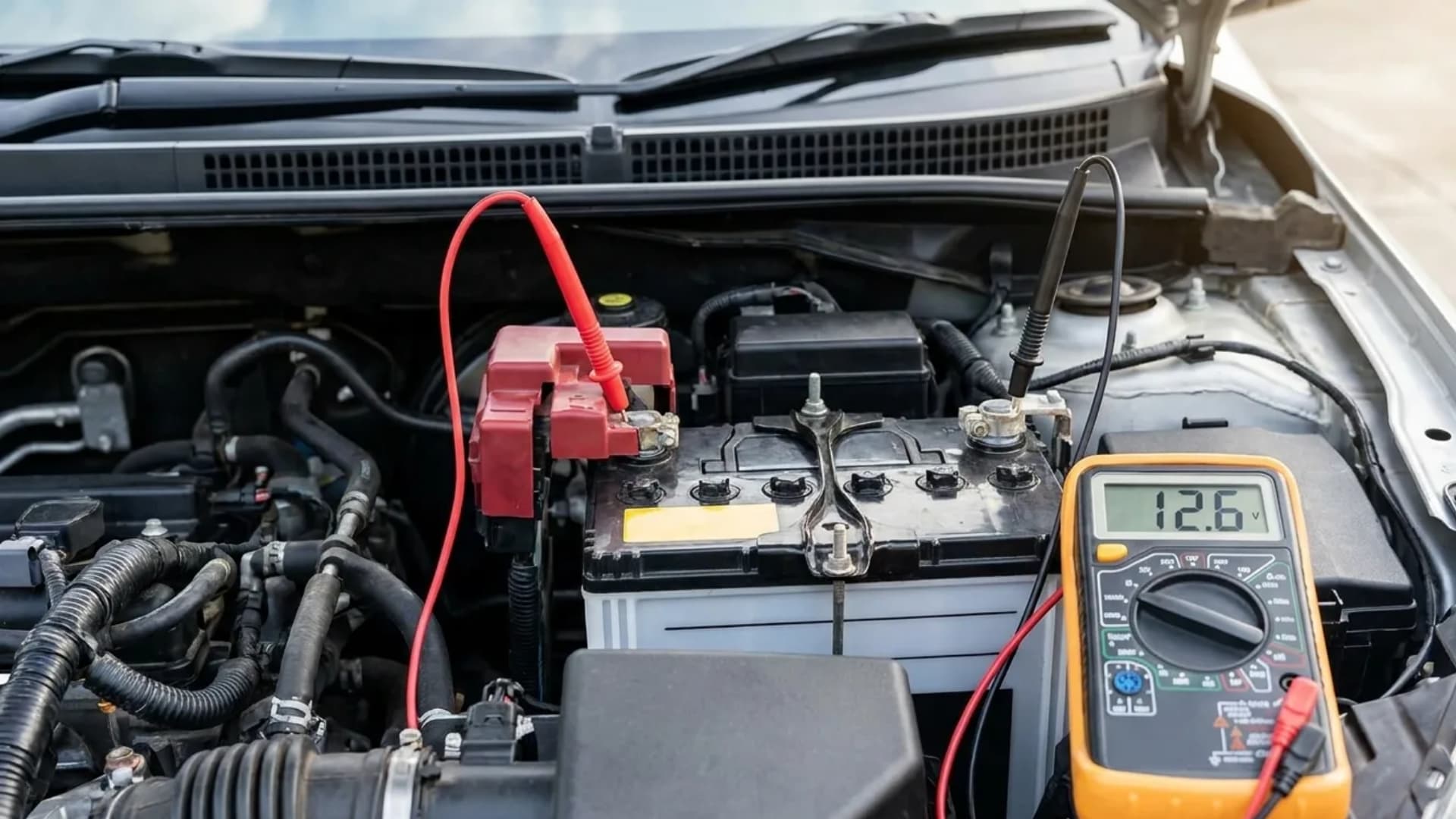
With the engine off, connect a multimeter across the battery terminals (red probe to positive, black to negative). A healthy battery reads 12.6V or higher. A reading below 12.0V indicates significant discharge; below 11.8V suggests the battery can no longer hold a proper charge. If you do not own a multimeter, most auto parts stores (AutoZone, O’Reilly, Advance Auto Parts) will test your battery for free. Knowing how to choose the right car battery for your vehicle also matters here, since mismatched batteries can cause chronic charging problems even with a working alternator.
Step 3: Test the Alternator Output
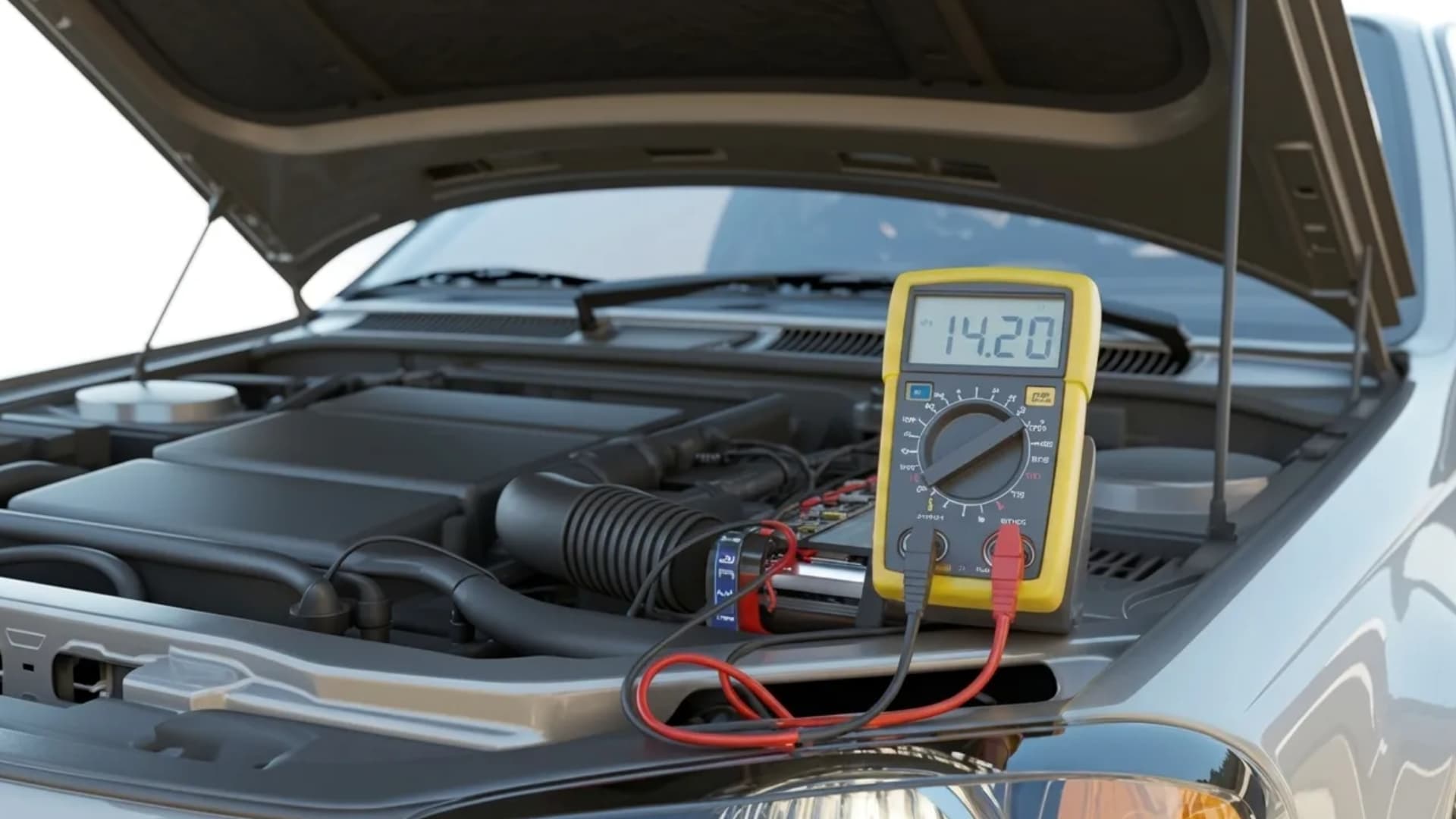
Start the engine and check the voltage at the battery terminals again. The reading should rise to between 13.5 and 14.5 volts. A reading below 13.5V means the alternator is undercharging. Above 14.8V indicates a voltage regulator fault.
For a more thorough test, turn on the headlights and the AC; if voltage drops below 13.0V under that combined load, the alternator is failing. The same free testing stations at auto parts stores can run an alternator load test as well.
Step 4: Inspect the Serpentine Belt

With the engine off, locate the serpentine belt that wraps around the alternator pulley. Look for visible cracking, fraying, or glazing on the belt surface. Press on the belt between two pulleys: it should feel firm with minimal give.
A belt that deflects more than about half an inch under moderate finger pressure is too loose and will slip under load. Neoprene belts typically need replacement every 40,000 to 50,000 miles.
Newer EPDM belts can last up to 100,000 miles, but still need periodic inspection because they crack internally before showing external wear.
Step 5: Check Fuses and Wiring
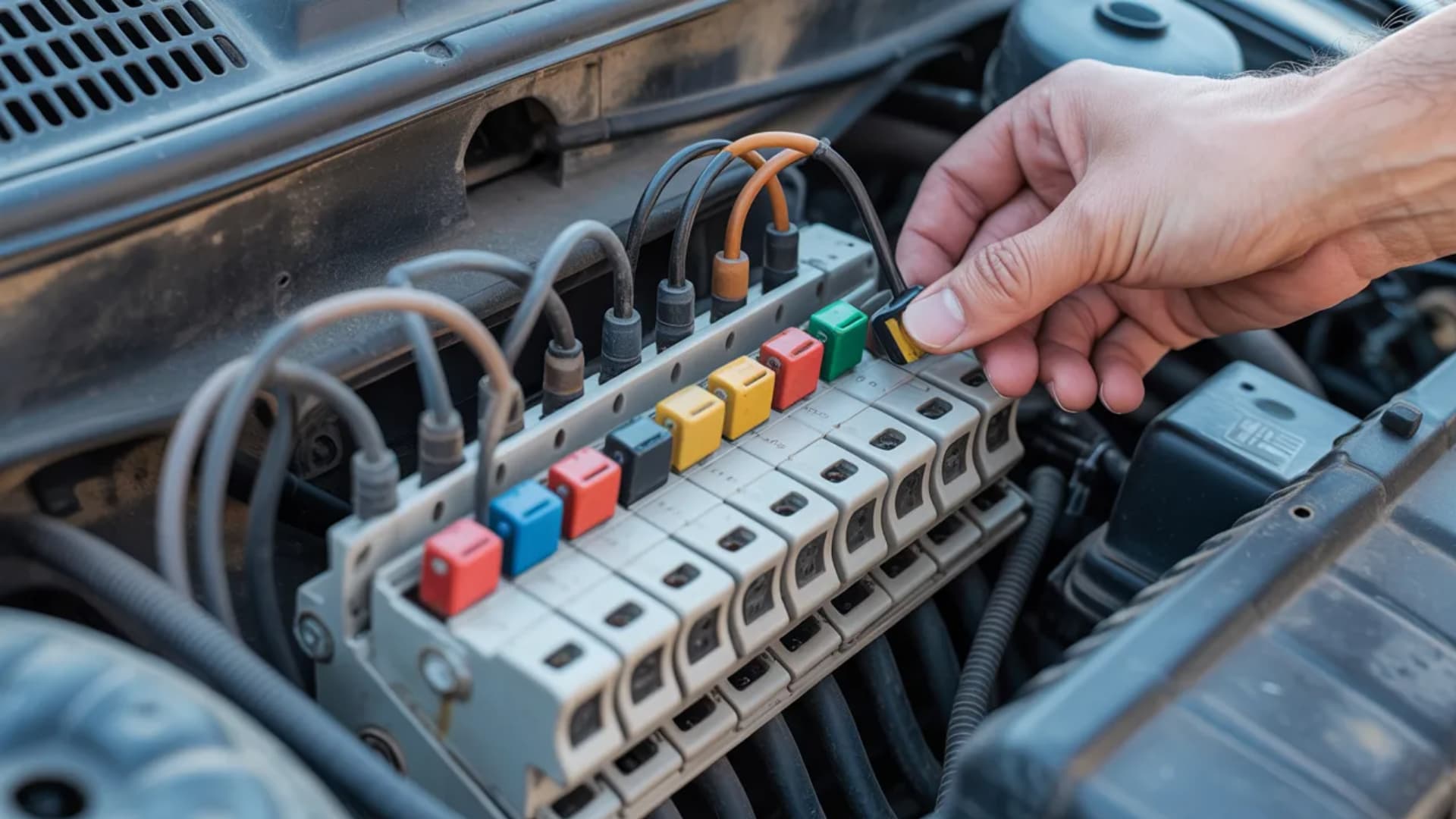
Open the underhood fuse box and identify the fuses labeled ALT, BATT, or CHARGE in your owner’s manual. Pull each one and hold it up to light: a broken metal strip inside indicates a blown fuse.
Also, inspect the main wiring harness running from the alternator to the battery for cracked insulation, corrosion at connector pins, or wires that have rubbed against hot or moving engine components. Even a partial break in a ground strap can cause intermittent charging faults that are difficult to trace.
Step 6: Reset the Warning After the Repair
Once the root cause is repaired, the warning will not always clear on its own. On most GM vehicles, disconnecting the negative battery terminal for 15 minutes and then reconnecting it will clear the BCM’s stored fault code.
An OBD-II scanner can also clear it directly. If the warning returns within a day or two of normal driving, the underlying fault has not been fully resolved, and the vehicle needs a full diagnostic scan, not another reset.
Can You Drive With the Service Battery Charging System Warning On?
Yes, but only briefly and with a plan. Once the warning appears, the car is running entirely on stored battery power. Under normal driving conditions with minimal electrical loads, that gives you roughly 20 to 30 minutes before voltage drops low enough to begin shutting down systems. Turn off the AC, heated seats, and non-essential accessories immediately to extend that window. Headlights are necessary for safety at night but draw significant current; if the warning appears after dark, the safe window shortens considerably.
Do not attempt to “make it home” across a long distance. The sequence of failures as battery voltage drops is predictable: the radio cuts first, then the power steering on electric systems, then the instrument cluster dims, and finally the engine stalls without warning. A stall on a highway or busy road creates a dangerous situation that far outweighs the inconvenience of stopping immediately.
What This Means for You: Repair Costs by Component
Cost varies significantly depending on which part has failed. The table below shows typical US repair ranges as of early 2025. Labor rates vary by region; independent shops generally charge $50 to $100 per hour, while dealerships typically charge $100 to $150.
| Repair | Estimated Cost (USD) | Notes |
|---|---|---|
| Terminal cleaning | $0 to $50 | DIY costs nothing; the shop charge is labor only |
| Fuse replacement | $5 to $30 | Inexpensive; the fuse itself costs under $5 |
| Serpentine belt | $50 to $150 | Belt plus one hour of labor |
| Battery replacement | $100 to $250 | Varies by group size and battery chemistry |
| Wiring or fuse link repair | $50 to $200 | Higher end if harness routing is complex |
| BCM reprogramming | $150 to $600 | Many independent shops can do this; not dealer-only |
| Alternator replacement | $300 to $800 | Remanufactured units reduce cost; OEM costs more |
One practical note: auto parts stores will test your battery and alternator for free before you pay for anything. Use that service before authorizing a repair. A shop that replaces an alternator without first load-testing the battery may leave an underlying cause unaddressed.
Warning Signs That the Charging System Is Failing
The “Service Battery Charging System” message does not always appear first. The electrical system typically gives earlier signals:
- Dim or flickering headlights: The alternator is struggling to maintain voltage under load. This is often most noticeable at idle when engine RPM is lower, and alternator output decreases.
- Slow or labored engine cranking: The starter motor is not receiving full voltage. The battery is low, or resistance somewhere in the charging circuit is robbing current before it reaches the starter.
- Intermittent electrical faults: Power windows that slow down, a radio that resets, or a climate control system that behaves erratically all point to unstable voltage. These symptoms appear before voltage drops far enough to trigger the warning light.
- Battery warning light (the dashboard battery icon): This is a separate but related alert. On most vehicles, this light comes on when the voltage drops below about 12.5V. The “Service Battery Charging System” text message typically follows if the problem is not addressed.
- Burning smell or belt squealing: A burning rubber smell often indicates a slipping serpentine belt. A squealing sound from the engine bay, especially at startup, points to the same issue. Both require immediate attention.
- Warning returns within 48 hours of a reset: A fault that clears and then comes back quickly is still active. Repeating resets without addressing the cause is not a fix; it masks the problem while the underlying component continues to degrade. This pattern frequently points to a failing alternator diode or a battery that cannot hold an adequate charge.
How to Prevent Charging System Problems
- Test the battery every six months: Most auto parts stores offer free battery load tests. A battery showing less than 70% capacity is worth replacing proactively, especially before winter when cold weather increases starting loads.
- Clean terminals annually: Even without visible corrosion, a quick cleaning each year prevents gradual resistance buildup at the connection points.
- Replace the battery before year five: Battery capacity declines steadily after year three. Replacing a four-year-old battery before it causes a charging system warning is cheaper than an emergency roadside replacement.
- Inspect the serpentine belt at oil changes: A mechanic inspecting the belt every 5,000 miles catches cracking or looseness long before it causes a failure.
- Take at least one 30-minute highway drive per week: Short city trips do not give the alternator enough time to fully replenish the battery. Frequent short-distance driving is one of the most common causes of premature battery wear.
When to Take It to a Mechanic
Three situations call for a professional diagnosis rather than further DIY troubleshooting:
First: the battery and alternator both test normal on a multimeter, but the warning persists or returns within 48 hours. This scenario often points to a BCM software fault or a wiring issue that requires a scan tool to isolate.
Second: alternator output reads below 13.5V at a warm idle with headlights and AC on, but the alternator is less than two years old. A newly replaced alternator that is underperforming may be a remanufactured unit with a bad voltage regulator, or the underlying cause (shorted battery, bad ground strap) was not fixed before the alternator was replaced.
Third: you notice multiple electrical systems failing at once. A radio cutting out is one thing. If the power steering, instrument cluster, and interior lights are all behaving erratically at the same time, the problem has progressed beyond a single component failure, and the car needs a full electrical diagnostic before it strands you.
Any independent shop equipped with a GM Tech2 or equivalent scan tool can run a full BCM diagnostic. This does not require a dealership visit.
Frequently Asked Questions
What does the service battery charging system message mean on a Chevy or GMC?
It means the vehicle’s ECU has detected that the charging circuit is not maintaining proper voltage, typically between 13.5 and 14.5 volts while the engine runs. The most common cause on GM platforms is a failing alternator, followed by a weak battery and corroded terminals. The BCM stores a fault code when this warning appears; reading that code with an OBD-II scanner narrows the diagnosis significantly.
Can I drive with the service battery charging system warning on?
Yes, but only for 20 to 30 minutes under low electrical load. Turn off the AC, heated seats, and any non-essential accessories. Do not attempt a long drive. The battery will continue to drain without the alternator replenishing it, and the engine will stall when the voltage drops too low to power the fuel injectors and ignition system.
How do I know if my alternator or battery is causing the warning?
Test the battery voltage with the engine off (should read 12.6V or above), then start the engine and test again (should read 13.5 to 14.5V). If the engine-off voltage is low but the running voltage is within range, the battery is weak. If the running voltage is also low, the alternator is not charging properly. If both tests are normal, but the warning remains, the BCM or wiring is the likely fault.
What voltage should the alternator produce?
A healthy alternator produces between 13.5 and 14.5 volts at the battery terminals with the engine running at idle. Above 14.8 volts indicates an overcharging condition (usually a failed voltage regulator) that will shorten battery life. Below 13.5 volts at idle, especially under a combined AC and headlight load, indicates the alternator is underperforming and needs replacement or further testing.
How long does a car battery typically last?
Most lead-acid car batteries last three to five years. Frequent short trips, extreme heat, and parasitic electrical drains shorten that lifespan. Cold climates affect starting load but not overall lifespan as dramatically as heat does; sustained temperatures above 90 degrees Fahrenheit accelerate electrolyte loss and plate corrosion inside the battery.
Will the service battery charging system warning clear on its own after a repair?
Not always. On most GM vehicles, the BCM retains the fault code even after the underlying problem is fixed. Disconnecting the negative battery terminal for 15 minutes clears most stored codes. An OBD-II scanner will clear it more reliably and also confirm whether any additional codes were stored alongside the charging system fault.
Final Thoughts
Cost depends entirely on the failed component. Terminal cleaning costs nothing if you do it yourself. A fuse replacement runs under $10. Battery replacement typically costs $100 to $250. A serpentine belt runs $50 to $150 with labor. Alternator replacement is the most common repair, at $300 to $800, depending on the vehicle and whether an OEM or remanufactured unit is used. BCM reprogramming at an independent shop costs $150 to $400.
| Repair cost estimates current as of April 2026. Prices vary by region, vehicle model, and whether OEM or aftermarket parts are used. Verify with your mechanic before authorizing any repair. |